Fire Damage Restoration in Atlanta, GA
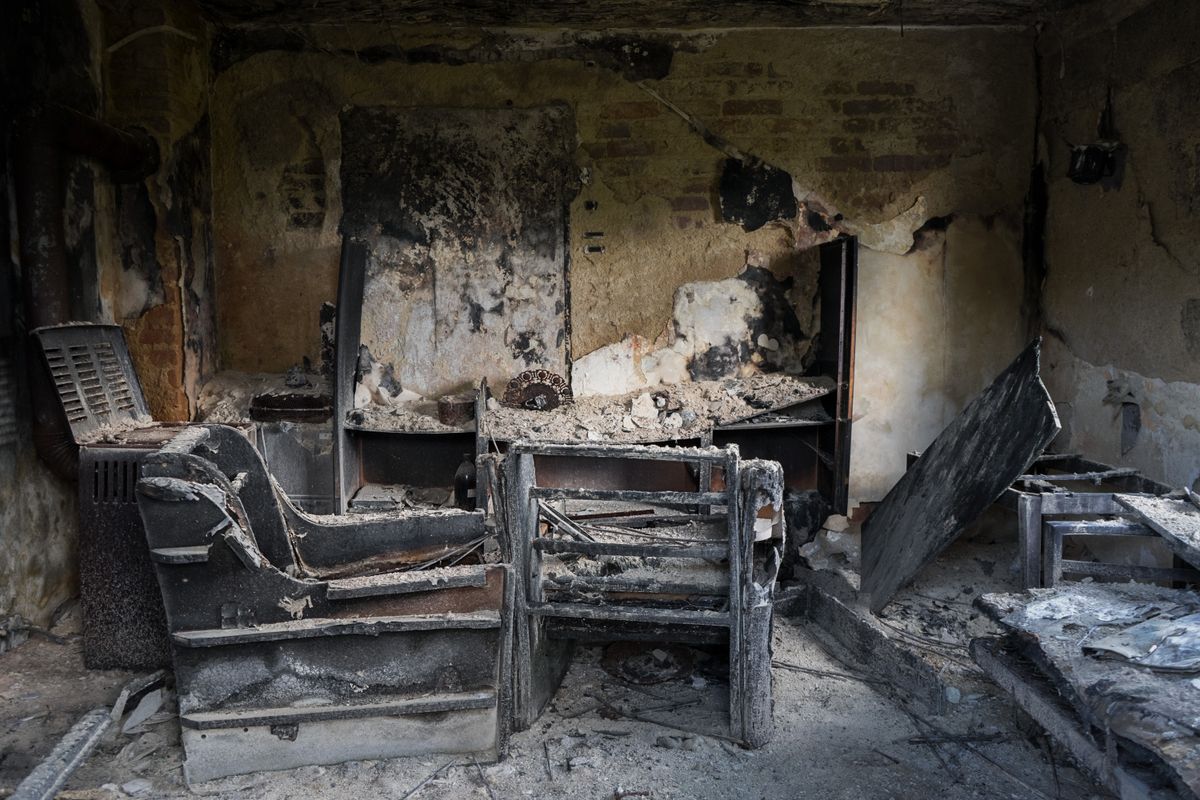
A fire in your home or business is one of the most devastating experiences a property owner can face. Beyond the visible damage from flames, smoke and soot continue to cause damage long after the fire is out - corroding metal, discoloring surfaces, and embedding persistent odors into every material they touch. Safe Home Restoration provides complete fire damage restoration throughout Metro Atlanta following the ANSI/IICRC S700-2025 Standard, the first-ever publicly reviewed American National Standard for Professional Fire and Smoke Damage Restoration.
The New S700-2025 Standard
The ANSI/IICRC S700-2025 Standard for Professional Fire and Smoke Damage Restoration is the first edition of this landmark standard, published in 2025. It establishes the minimum technical requirements for restoring structures and contents affected by fire, smoke, and soot, replacing the previous informal guidelines with a formal, consensus-based American National Standard. Key elements include:
- Sequential phase-based framework - Restoration work is organized into sequential phases tied to damage classification, ensuring a structured approach from emergency response through final clearance
- Four smoke residue classifications - The Standard defines distinct residue types (dry smoke, wet smoke, protein residue, and fuel oil/puff-back), each requiring specific cleaning agents, pH ranges, and dwell times
- Safety protocols aligned with OSHA - Air quality testing before entry, PPE tiers based on contamination, and hazardous material protocols for pre-1980 structures (asbestos and lead)
- Comprehensive documentation requirements - Written moisture maps, photographic logs, material disposal manifests, and cleaning verification records
- Integration with S500 - When suppression water creates secondary moisture damage, both S700 and S500 standards apply simultaneously
- Restoration vs. reconstruction criteria - The Standard defines clear criteria based on substrate porosity, residue penetration depth, and structural integrity for when materials can be cleaned versus when they must be replaced
Types of Smoke Damage
The S700-2025 Standard classifies smoke residue into four distinct categories, each requiring different cleaning agents and methods. Identifying the residue type during assessment directly determines which cleaning approach the Standard authorizes:
- Dry smoke - Produced by fast-burning, high-temperature fires (paper, wood). Leaves a fine, powdery residue that is relatively easier to clean but can penetrate deeply into porous materials
- Wet smoke - Produced by slow-burning, low-temperature fires (rubber, plastic). Leaves a sticky, smeared residue with strong pungent odor. This is the most difficult type to clean and requires more aggressive cleaning agents with specific pH ranges
- Protein residue - Nearly invisible film from kitchen fires involving evaporated food matter. Extremely pungent odor that typically requires enzymatic or oxidizing treatment, as standard cleaning agents are insufficient
- Fuel oil/furnace puff-back - Oily soot from heating system malfunctions. Penetrates porous surfaces deeply and requires specialized cleaning techniques
Understanding Fire Damage
Fire damage is more complex than most people realize. A single fire event causes multiple types of damage that each require different restoration approaches:
- Flame damage - Direct heat and fire can char, burn, or completely destroy building materials, furniture, and belongings
- Smoke damage - Smoke particles penetrate deep into walls, fabrics, and porous materials, causing discoloration and persistent odor
- Soot damage - Fine carbon particles settle on every surface, and if not cleaned properly, they can cause permanent staining and corrosion
- Water damage - The water used to extinguish the fire often causes significant secondary water damage that must be addressed alongside the fire damage under the S500 Standard
- Odor penetration - Smoke odors can linger for months or years if not treated with professional deodorization techniques
Our S700-2025 Restoration Protocol
We follow the S700-2025 Standard, which organizes restoration into sequential phases tied to the damage classification and residue type identified during assessment:
1. Emergency Stabilization & Board-Up
After a fire, your property is vulnerable to weather, theft, and vandalism. We provide emergency board-up services to secure broken windows, doors, and compromised walls, and we tarp damaged roofs to prevent rain from causing additional water damage. This step protects your property and is often required by insurance policies. The S700 Standard requires that safety hazards be addressed before any assessment work begins.
2. Damage Assessment & Residue Classification
Our IICRC-certified technicians conduct a thorough assessment of fire, smoke, and soot damage, as well as any water damage from firefighting efforts. We classify the smoke residue type (dry, wet, protein, or fuel oil) and determine the extent of penetration into each material. Per the S700 Standard, this classification directly determines which cleaning agents, agitation methods, and equipment are authorized for each surface. We document all damage with photographic logs and written notes for your insurance claim and develop a comprehensive restoration plan.
3. Safety & Air Quality Assessment
Per the S700 Standard and OSHA 29 CFR 1910.134, we perform air quality testing before technicians enter heavily fire-affected spaces. We assess for carbon monoxide, volatile organic compounds (VOCs), and other combustion byproducts. PPE tiers are assigned based on contamination levels. For structures built before 1980, we test for asbestos-containing materials and lead paint, which trigger EPA NESHAP obligations before any demolition begins.
4. Water Removal & Drying (S500 Integration)
When firefighting efforts leave standing water, we address it immediately under the IICRC S500 Standard. This integrated approach handles both the fire damage and the secondary water damage simultaneously. We extract water, install drying equipment, and monitor moisture levels to prevent mold growth and further structural damage.
5. Soot & Smoke Removal
We use specialized cleaning agents and techniques matched to the residue type identified during assessment. Dry smoke requires different chemical pH ranges and dwell times than wet smoke or protein residue. Our IICRC-certified technicians know the correct approach for each material - what works on metal would damage wood, and what works on glass would stain fabric. We clean all structural surfaces including walls, ceilings, floors, and the HVAC system, which often circulates soot and smoke odors throughout the building. The S700 Standard requires that cleaning methods align with the residue type identified during assessment.
6. Odor Elimination
Smoke odor is one of the most challenging aspects of fire damage restoration. We use professional deodorization techniques including thermal fogging, ozone treatment, and hydroxyl generation. The S700 Standard requires that counteractant methods be appropriate to the residue depth and substrate porosity, with treatment duration and concentration documented. These methods neutralize odor molecules at the source rather than simply masking them with fragrance. For severe odors, we seal walls and ceilings with a specialized odor-blocking primer.
7. Contents Cleaning & Pack-Out
We clean and sanitize all salvageable contents, including furniture, clothing, electronics, and personal belongings. For items that cannot be cleaned on site, we offer pack-out services - we carefully inventory, pack, and transport your belongings to our facility for specialized cleaning and restoration. The S700 Standard requires documentation of all contents processing, including cleaning methods used and verification of results.
8. Verification Inspection
After cleaning and deodorization, we conduct a post-cleaning visual and sensory inspection against pre-defined completion criteria. The S700 Standard requires that verification be documented with photographs. We verify that all surfaces meet the Standard's cleanliness criteria, that odors have been eliminated, and that moisture levels are within acceptable ranges before reconstruction begins.
9. Reconstruction
Once cleaning and deodorization are verified, we handle the reconstruction of damaged areas - replacing drywall, flooring, cabinetry, and paint to return your property to its pre-loss condition. The S700 Standard distinguishes restoration (cleaning and treating materials) from reconstruction (removing and replacing materials), with criteria based on substrate porosity, residue penetration depth, and structural integrity. We manage the entire reconstruction process so you do not have to coordinate multiple contractors.
What to Do After a Fire
- Do not re-enter the property until the fire department says it is safe
- Do not attempt to clean soot or smoke damage yourself - improper cleaning can cause permanent damage and may void insurance coverage
- Do not turn on any electrical appliances that may have been exposed to heat, smoke, or water until they have been inspected
- Do not eat any food that was exposed to heat, smoke, or firefighting chemicals
- Take photos of all damage for your insurance claim
- Contact your insurance company as soon as possible to start the claims process
- Call a professional IICRC S700-certified restoration company immediately to begin the mitigation process
Insurance & Documentation
The S700 Standard requires comprehensive documentation including written moisture maps, photographic logs, material disposal manifests, and cleaning verification records. We provide all of this documentation to your insurance company to demonstrate that the work meets the industry standard of care. Contractors operating outside IICRC S700 guidelines face heightened risk of claim denial by insurance carriers who require IICRC-compliant documentation. We bill insurance directly and coordinate with your adjuster throughout the process.
Recovering From a Fire?
We are here to help you through every step of the recovery process. Our S700-2025 certified team will restore your property and your peace of mind.